There's a moment in every leader's career where the role becomes something else. The decisions get quieter. The feedback gets louder. And the people you used to lean on can't follow where you're going.
That's when mentorship matters most. Not advice from someone who's read about your problem, but clarity from someone who's lived it. I work with leaders in transition: new to the role, navigating a transformation, or making calls that nobody around them can help with.
The insight
Most leaders I mentor aren't struggling because they lack skill. They're struggling because the work has changed. The job shifts from solving problems to reading systems. From having answers to sitting with ambiguity. The things that got them here stop being enough. And very few people make that transition without help.
I've watched this pattern play out hundreds of times. A leader makes a call based on incomplete information. Nobody pushes back. The decision compounds. Six months later, the best people have left and nobody can explain why. It's not a talent problem. It's a clarity problem.
Leaders who build lasting organizations see how decisions actually land. Three levels down. Across teams. Into real lives.That's not sentimentality. It's structural.
The framework
The best leaders I've worked with, across Verizon, Adobe, and Code and Theory, share three operating principles. They didn't learn these from a book. They learned them by building things that lasted.
Give people something to be proud of.
Not through slogans. Through the quality of the work itself. When people care about what they're building, they hold themselves to a higher standard than any performance review can impose.
Give people something to be part of.
Real ownership, not theater. Share the information. Tolerate the disagreement. The organizations that manage around people instead of through them are already losing.
Give people something to build.
Talented people need to see their work compounding. If your best people can't point to something they've built that will outlast them, they're already thinking about where they can.
My lens
Every organization I've worked inside, from Fortune 500 enterprises to growth-stage companies, runs on the same underlying dynamics. Different context, same patterns. The politics, the friction, the talent problems, the strategic drift. None of it is new.
The value I bring isn't answers. It's pattern recognition. Seeing the thing you're standing inside of, from the outside.
When you see the pattern, the path forward gets simpler. Not easy. Simpler. You stop solving symptoms and start addressing the thing underneath. That's what mentorship is for.
The goal is to sharpen your judgment, not replace it. To make you better at seeing what's in front of you, so you stop needing me.
Ask before you tell.
I hold back until I understand what you're actually stuck on, which is rarely what you think it is.
Name the pattern, not just the answer.
"Here's what I'd do" doesn't transfer. "Here's the question I'd ask myself in situations like this." That's something you carry forward.
Make yourself unnecessary faster than feels comfortable.
The measure isn't how long we work together. It's whether you're seeing things more clearly than when we started. The point is your judgment, not mine.
What it sounds like
"Without the story, can you break down what's actually happening here?"
"What assumption are you making that you're afraid to say out loud?"
"Where else has this dynamic played out in your career?"
"What's the thing you're not saying?"
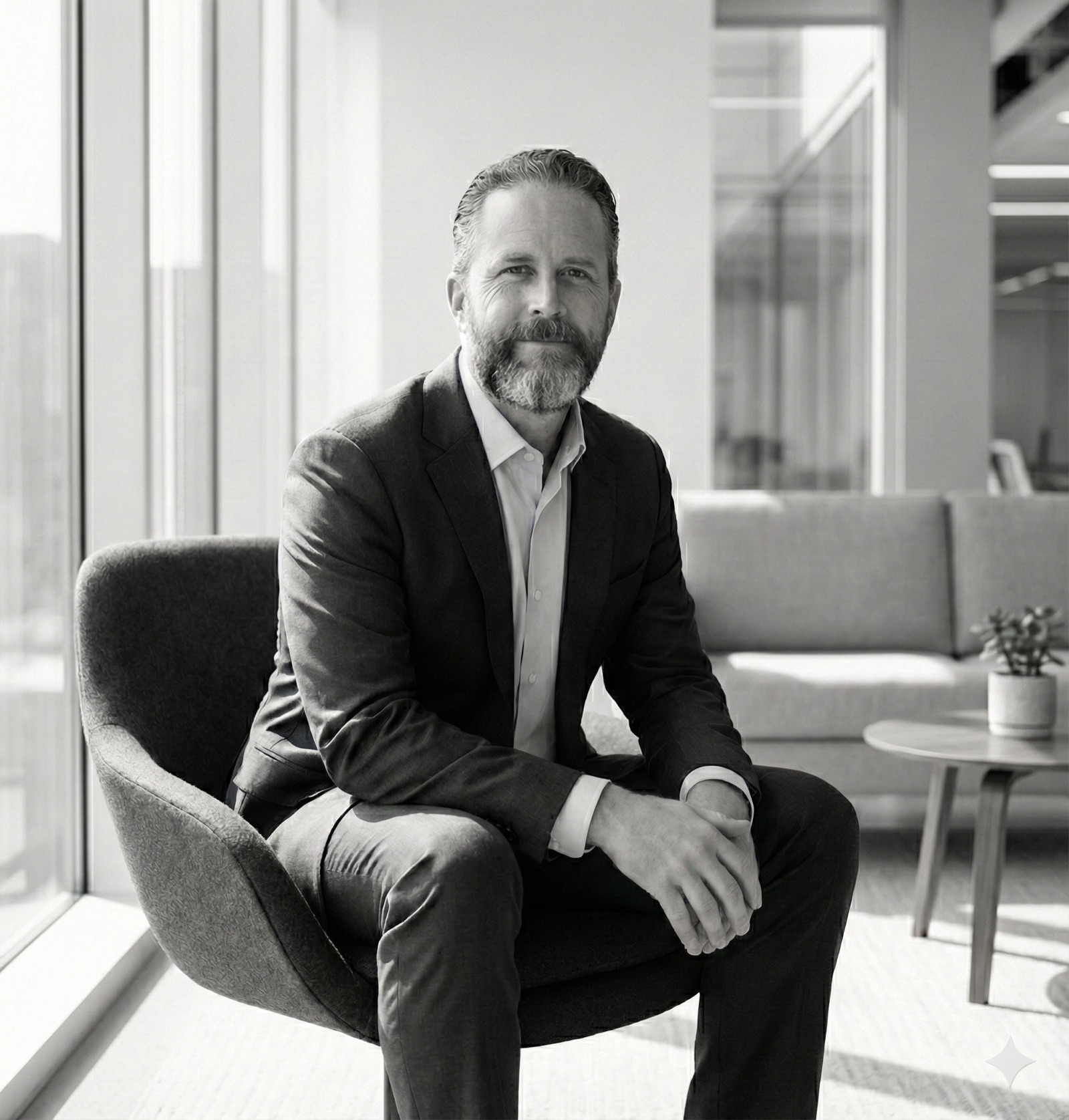
Twenty years in enterprise transformation. Built a multi-billion dollar digital marketing engine at Verizon. Ran enterprise partnerships at Adobe. Scaled an AI consulting practice from zero to eight figures at Code and Theory. Grew up in Iowa, spent two decades in New York and the Bay Area, and came back.
If any of this sounds like where you are right now, let's talk.
Mentorship is separate from my consulting work. No pitch, no engagement proposal. Twenty minutes to see if there's a fit. I take on a handful of people at a time, and if I'm at capacity, I'll say so honestly.
me@coryhaldeman.com